(626) 323-9443
 432 W Foothill Blvd, Glendora, CA 91741, USA

In pain? Call (626) 323-9443 for same-day care. In pain right now? Call (626) 323-9443 — same-day emergency appointments available.
In pain? Call (626) 323-9443 for same-day care. In pain right now? Call (626) 323-9443 — same-day emergency appointments available.
Comfortable, precise endodontic care that stops tooth pain at its source and protects your natural tooth for years to come.
A toothache that throbs when you bite down, lingers after hot coffee, or wakes you up at 2 a.m. usually means the soft tissue inside your tooth, the pulp, has become inflamed or infected. That pulp contains nerves and blood vessels, and once bacteria reach it through a deep cavity, a crack, or an old filling that has failed, the body cannot heal it on its own. Left alone, the infection spreads toward the root tip, often forming an abscess that can threaten the bone supporting your tooth.
At Glendora Healthy Smiles, root canal therapy is how we remove that infected tissue, clean and seal the inner chamber of the tooth, and stop the pain cycle without removing the tooth itself. We know the reputation root canals have, but the procedure itself is designed for comfort, and most patients tell us it feels very similar to getting a routine filling. We use digital imaging to pinpoint the problem precisely, so treatment is focused, efficient, and respectful of your time.
Our goal as part of our broader restorative dentistry services is always to preserve your natural tooth whenever possible. A tooth you were born with, properly treated and protected with a crown, can continue functioning for decades, chewing, speaking, and supporting the rest of your bite exactly as it should.
Schedule a Consultation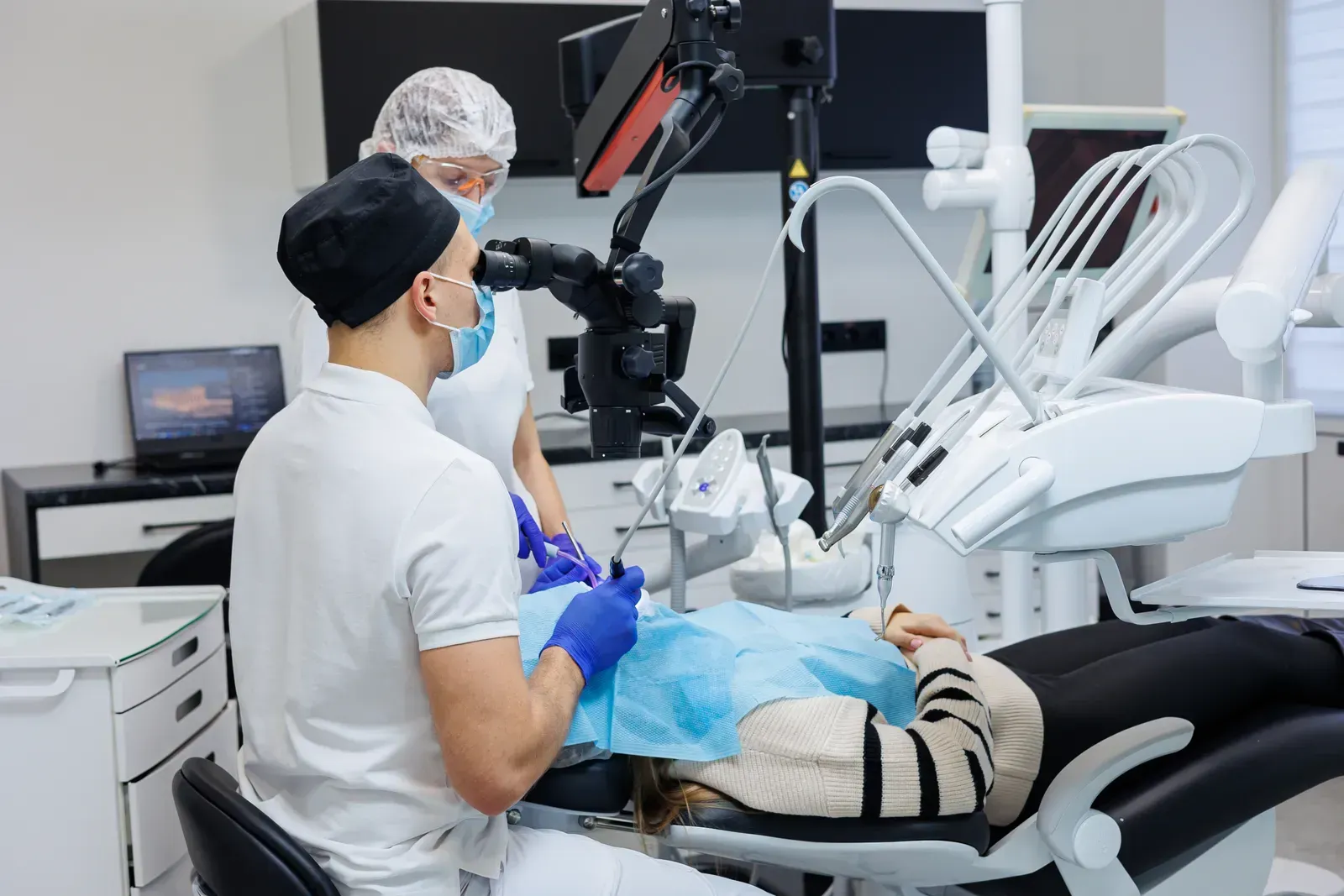
Root canal therapy is not just about quieting a toothache for a few days. Done well, it addresses the underlying infection completely and restores the tooth to full, comfortable function. Here is what patients consistently experience after treatment with our team.
Once the inflamed or dying pulp tissue is removed, the throbbing, sharp, or lingering pain that brought you in typically subsides very quickly. Most patients report significant relief within a day or two of treatment, with any residual soreness fading over the following week.
Keeping your own tooth preserves the bone structure around it and avoids the shifting of neighboring teeth that often follows an extraction. It also means you skip the additional cost and healing time that come with implants or bridges.
We clean every canal thoroughly and seal it so bacteria cannot re-enter the tooth. This prevents the infection from spreading to the jawbone, sinuses, or other areas of the body, protecting your overall health, not just your smile.
Once the tooth is restored with a crown or filling, you can bite and chew on that side of your mouth again without hesitation. Many patients had been unconsciously favoring the other side for weeks before treatment without realizing it.
Dental pain is notorious for flaring up at night when you lie down and blood flow to the head increases. Removing the source of infection means fewer middle-of-the-night wake-ups and more restful, uninterrupted sleep.
That jolt of pain from hot soup or an iced drink disappears once the damaged nerve tissue is removed. You can enjoy your coffee, ice water, and favorite meals again without bracing for discomfort.
If an abscess had caused visible swelling in your cheek or gum, treating the infected pulp allows that swelling to go down as your body clears the remaining infection. We may pair treatment with antibiotics in more advanced cases to speed this along.
A tooth that has had root canal therapy is more brittle than before, so a custom crown protects it from future fracture under normal biting forces. With that protection in place, treated teeth routinely last for decades.
Pulp infections do not always announce themselves the same way in every person. Some patients feel intense, obvious pain, while others notice only subtle changes that are easy to dismiss until the problem worsens. If any of the following sound familiar, it is worth having the tooth evaluated.
Pain that comes and goes but keeps returning, or a constant dull ache, often signals that the nerve inside the tooth is inflamed or infected beyond the point of self-healing.
Brief sensitivity to hot or cold is common, but pain that lingers for 30 seconds or longer after the stimulus is removed usually points to irreversible pulp damage.
Sharp discomfort when you apply pressure to a specific tooth can indicate infection has reached the ligament surrounding the root, which supports the tooth in the bone.
Swelling, a small bump, or tenderness in the gum tissue near a tooth is frequently a sign that an abscess is forming and draining infection into the surrounding area.
A tooth that gradually turns gray, yellow, or dark compared to its neighbors often means the internal tissue has died, even if pain is minimal or absent.
A small, recurring bump near the base of a tooth, sometimes called a "gum boil," is a drainage point for an abscess and should never be ignored.
A cavity that has reached deep into the tooth, or a crack extending toward the root, gives bacteria a direct path to the pulp chamber.
When a large filling or crown fails or loosens, it can allow bacteria to leak in around the edges and reach the nerve tissue underneath.
Visible swelling in the face, jaw, or neck alongside tooth pain is a more urgent sign of a spreading infection and should be evaluated right away.
Teeth that have undergone multiple fillings or procedures over the years are more prone to pulp irritation and eventual infection, even without obvious symptoms.
Because infections can progress silently, especially in teeth that have had prior nerve damage, we recommend a prompt exam with digital X-rays whenever any of these signs appear. Catching the problem early typically means a simpler procedure and a faster return to full comfort.
Pulp damage rarely happens overnight. It usually results from one or more ongoing issues that slowly compromise the protective layers of the tooth until bacteria find their way inside.
A cavity that is never filled continues to eat through enamel and dentin until it reaches the pulp chamber, introducing bacteria directly to the nerve.
Teeth that have been filled, drilled, or crowned multiple times accumulate microscopic trauma to the pulp, making it more vulnerable over time.
A crack from biting down on something hard, grinding, or an old injury can create a pathway for bacteria even when the tooth looks intact on the surface.
A blow to the mouth, even one that happened years ago, can damage the internal blood supply to a tooth and eventually cause the pulp to die.
Constant clenching and grinding wear down enamel and place repetitive stress on teeth, gradually increasing the risk of cracks that expose the nerve.
Advanced periodontal infection can travel down along the root surface and reach the pulp from below, independent of any decay on the crown of the tooth.
Older fillings can shrink, leak, or crack around their edges, allowing bacteria to seep underneath them and slowly reach the pulp tissue.
Ignoring early sensitivity or mild discomfort gives a developing infection more time to progress from reversible inflammation to irreversible nerve damage.
Every root canal we perform is tailored to the specific tooth, its root anatomy, and how advanced the infection has become. Here is what you can expect from your first visit through full recovery.
We start by talking through your symptoms in detail, when the pain started, what triggers it, and how it has changed over time. This history, combined with your dental records, helps us narrow down which tooth is affected before any instrument touches your mouth.
We examine the tooth closely and take digital X-rays to see the extent of decay, the shape of the root canals, and whether infection has reached the bone. Cold and percussion tests help confirm exactly which tooth is the source of the problem.
We thoroughly numb the area with local anesthetic so you feel no pain during the procedure, and we place a small protective barrier called a dental dam around the tooth. This keeps the treatment area clean and dry while you relax comfortably.
We create a small access opening in the top of the tooth and carefully remove the infected or dying pulp tissue from each canal. The canals are then cleaned, disinfected, and shaped to prepare them for a secure, lasting seal.
Once the canals are clean and dry, we fill them with a biocompatible material that seals out bacteria permanently. A temporary filling is placed on top to protect the tooth while your custom crown is being made.
At a follow-up visit, we fit a durable crown over the treated tooth to restore its strength and protect it from future fracture. We also check your bite to make sure the tooth functions comfortably alongside the rest of your smile.
Many patients come to us assuming that a tooth in this much pain should simply be pulled. In reality, extraction creates a new set of problems. When a tooth is removed, the bone that once supported it begins to shrink, nearby teeth can gradually shift into the open space, and your bite can become uneven over time. Replacing a missing tooth later with an implant or bridge is almost always more involved and more costly than treating and crowning the tooth you already have.
Root canal therapy addresses the infection at its source while keeping the tooth's root anchored firmly in the bone, maintaining the natural contours of your jaw and the alignment of your bite. The procedure has also improved substantially over the years. Modern rotary instruments, magnification, and precise digital imaging allow us to clean and seal canals with far greater accuracy than was possible even a decade ago, which translates to shorter appointments and more predictable healing.
Leaving an infected tooth untreated does not resolve on its own, even if the pain temporarily fades. A quiet infection can continue to damage the surrounding bone and, in some cases, contribute to more serious health complications if bacteria spread beyond the tooth. Treating it promptly protects both your smile and your overall well-being.
A few simple habits at home can make your recovery more comfortable and help protect your treated tooth for the long run. These steps work alongside, not in place of, the professional care you receive in our office.
For the first few days after treatment, choose soft foods and chew on the opposite side of your mouth to avoid putting pressure on the tooth while it settles.
Mild soreness for a day or two is normal, and an over-the-counter pain reliever like ibuprofen, taken as directed, usually keeps it well managed.
Continue brushing twice a day and flossing gently around the treated tooth to keep the area clean and reduce the risk of new decay forming.
Skip ice, hard candy, and sticky foods, especially before your permanent crown is placed, since the temporary filling is more vulnerable to damage.
If you clench or grind at night, a custom nightguard protects your treated tooth and crown from excessive force while you sleep.
Don't delay returning for your permanent crown. The sooner the tooth is fully sealed and protected, the lower the risk of reinfection or fracture.
These habits help your recovery go smoothly, but they are no substitute for a professional evaluation. If you notice swelling, worsening pain, or a bad taste near the treated tooth, contact our office right away.
You do not need to manage another sleepless night or skip your favorite foods because of a toothache. Our Glendora team is ready to evaluate your tooth, explain your options clearly, and get you comfortable again, often in a single focused visit.
Glendora Healthy Smiles · Glendora, CA | Call us: (626) 852-1203
Here are answers to the questions we hear most often from patients considering root canal treatment in Glendora.
Modern root canal therapy is performed under local anesthesia, so you should feel no pain during the procedure itself, just pressure. Most patients describe it as being very comparable to having a routine filling placed. Mild soreness for a day or two afterward is normal and typically manageable with over-the-counter pain relievers.
Most root canal appointments take between 60 and 90 minutes, depending on the tooth and the number of canals involved. Molars with multiple curved canals can take a bit longer than front teeth with simpler anatomy. We will give you a realistic time estimate during your consultation based on your specific tooth.
In most cases, yes, especially for back teeth that absorb heavy chewing forces. A root canal removes tissue from inside the tooth, which can make it more brittle, so a crown adds strength and protects against future fracture. For some front teeth with minimal damage, a smaller filling may be sufficient.
A filling is used when decay has not reached the pulp, while a root canal is needed once the nerve tissue is inflamed, infected, or dying. Signs pointing toward the latter include lingering sensitivity, spontaneous pain, or swelling. A clinical exam and digital X-rays are the only reliable way to tell the difference.
An untreated infection will continue to spread, potentially forming an abscess, damaging surrounding bone, and increasing your risk of losing the tooth entirely. Pain may temporarily fade as the nerve dies, but the infection remains active and can worsen without warning. In some cases, it can spread to other parts of the face or body.
With a properly placed crown and good oral hygiene, a tooth treated with root canal therapy can last for decades, often for the rest of your life. Regular checkups allow us to monitor the tooth and catch any issues with the crown or seal early, before they become bigger problems.
For most infected teeth, saving the natural tooth through root canal therapy is the better long-term choice. Extraction can lead to bone loss, shifting teeth, and the need for a more expensive replacement like an implant or bridge down the road. Keeping your natural tooth preserves your bite and jaw structure far more effectively.
Yes, we understand that tooth pain rarely waits for a convenient time, and we make every effort to see patients with severe pain or swelling as quickly as possible. Call our Glendora office directly and describe your symptoms so our team can prioritize your visit and get you relief sooner.
Glendora Healthy Smiles
Join the Glendora Healthy Smiles family and experience gentle, modern dental care designed around you. Book your visit today - we can't wait to meet you.