(626) 323-9443
 432 W Foothill Blvd, Glendora, CA 91741, USA

In pain? Call (626) 323-9443 for same-day care. In pain right now? Call (626) 323-9443 — same-day emergency appointments available.
In pain? Call (626) 323-9443 for same-day care. In pain right now? Call (626) 323-9443 — same-day emergency appointments available.
Custom-fitted dentures and partials built to restore your bite, your speech, and the smile you're comfortable sharing with others.
When teeth go missing, the effects reach far beyond an empty space in your smile. Chewing becomes harder, certain foods get avoided, speech can start to slur around missing front teeth, and the jawbone beneath the gap slowly begins to shrink from lack of use. Many patients also notice their face starting to look sunken or prematurely aged as the lips and cheeks lose the support that natural teeth once provided.
At Glendora Healthy Smiles, we treat dentures and partials as a long-term functional solution, not a one-size-fits-all product. Every mouth heals and shifts differently after tooth loss, which is why we take detailed impressions, evaluate your bite, and discuss your lifestyle before recommending full dentures, partial dentures, or implant-supported options. Our goal is a fit that feels secure when you talk and eat, not something you're constantly adjusting.
Whether you're replacing a few back teeth or need a full arch restored, our team walks you through every material option, cost consideration, and maintenance step so you can make a confident, informed decision for your long-term oral health.
Schedule a Consultation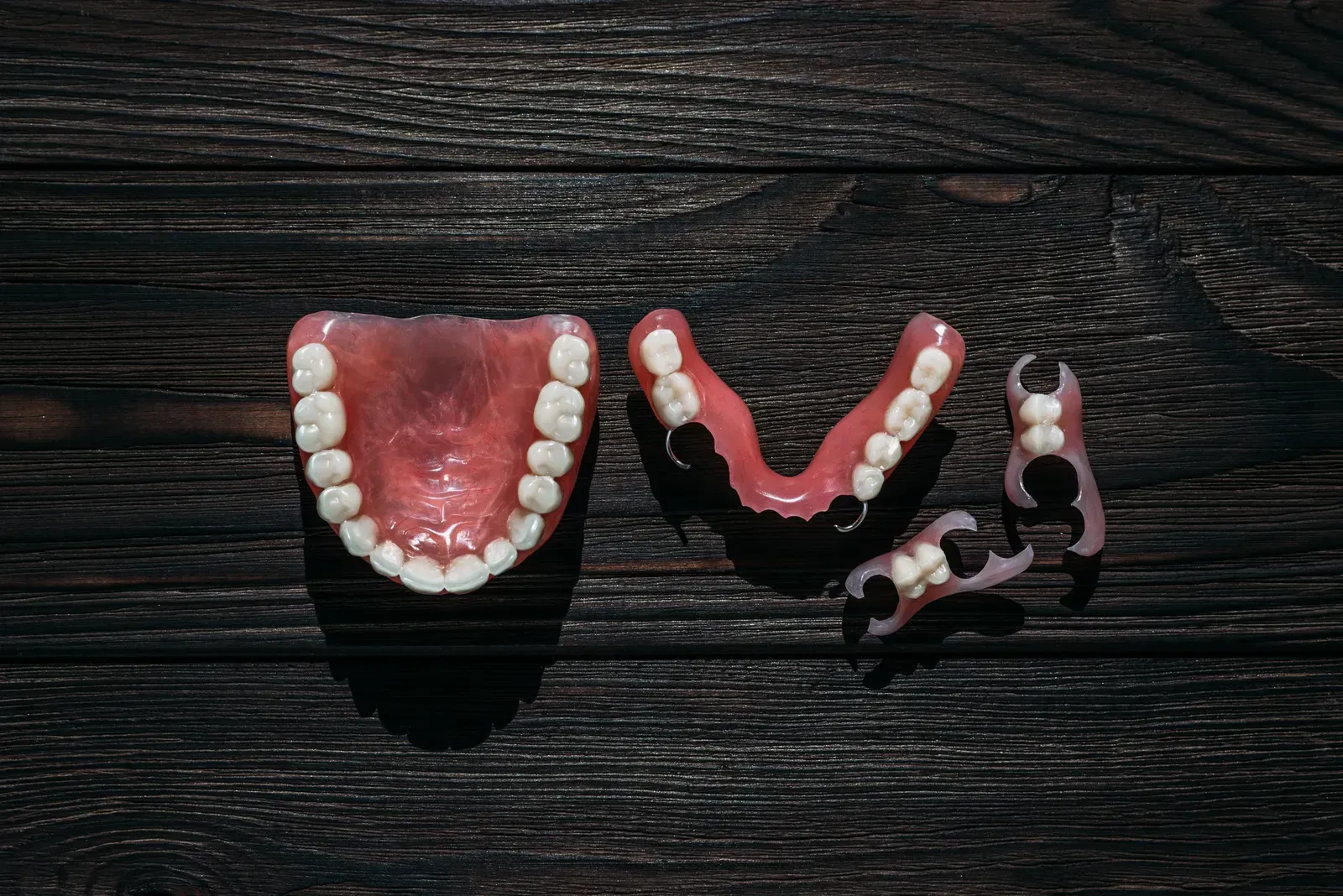
Properly fitted dentures and partials do far more than fill empty spaces. They restore everyday abilities most patients didn't realize they were missing until they're back, and the improvements often touch nutrition, speech, posture, and self-image all at once.
Missing teeth, especially up front, change the way air and tongue placement form words. Well-fitted dentures restore the structure your mouth needs to pronounce sounds clearly, so you stop avoiding certain words in conversation.
A custom-fitted appliance distributes bite force evenly across your gums and remaining teeth, letting you return to a fuller diet that includes vegetables, meats, and foods you may have been avoiding for years.
Dentures provide support behind the lips and cheeks that prevents the sunken, collapsed look associated with long-term tooth loss. Many patients tell us friends and family notice before they even mention the new teeth.
Natural-looking acrylic and porcelain teeth are shaded and shaped to match your facial features, so your new smile looks like it belongs there rather than looking artificial or overly uniform.
Partial dentures fill gaps that would otherwise let surrounding teeth drift or tilt out of position. Keeping your bite properly aligned protects the teeth you still have from premature wear and shifting.
While dentures rest on the gums rather than the bone itself, a properly balanced bite reduces excess pressure points and, when paired with implant support, can meaningfully slow the ridge resorption that follows tooth loss.
Ill-fitting dentures cause sore spots, clicking, and slipping that make patients hesitant to laugh or eat in public. A precise, professionally adjusted fit removes these frustrations so the appliance fades into the background of your day.
Compared to leaving gaps untreated and dealing with shifting teeth, jaw strain, and further decay, dentures and partials offer a defined, manageable investment with clear maintenance and replacement timelines.
Tooth loss doesn't always arrive all at once, and the signs that it's time to consider a denture or partial can look different depending on how many teeth are affected and how long the gaps have been there. Here are common indicators our Glendora patients describe before their first consultation.
If several teeth are missing, broken beyond repair, or loose from advanced gum disease, a partial or full denture may be the most practical way to restore a functional bite.
Avoiding meat, apples, nuts, or other firmer foods because chewing feels unstable or painful is a strong sign your current bite isn't supporting you properly.
When a gap is left untreated, neighboring teeth gradually tilt and drift, which can create crowding, bite misalignment, and increased wear elsewhere in the mouth.
A sunken look around the lips and cheeks or a shortened lower face can signal that long-standing tooth loss is affecting the support structures of your smile.
Missing front teeth in particular can cause whistling sounds or slurring on certain words, which often improves significantly once a denture restores the missing structure.
Gums and bone continue to change shape over the years, so a denture that once fit perfectly can start slipping, rocking, or causing sore spots and needs to be relined or replaced.
Chewing unevenly to favor remaining teeth puts extra strain on jaw muscles and joints, often leading to soreness, headaches, or fatigue after meals.
Hesitating to laugh, speak up, or smile in photos because of visible gaps is one of the most common reasons patients finally schedule a denture consultation.
Open spaces between teeth tend to trap food and make flossing difficult, which can lead to chronic gum irritation around the gap.
When multiple teeth have deep decay that's no longer restorable with crowns or fillings, extraction followed by a denture or partial is often the healthiest long-term path.
Because every patient's gum tissue, bone structure, and remaining teeth are different, a comprehensive exam with imaging is the only reliable way to determine the right denture type and timing. Waiting too long after tooth loss can make bone loss more pronounced and future fittings more complicated.
Tooth loss rarely happens for one single reason. Most patients we see have a combination of factors that built up gradually, which is part of why a full evaluation matters before deciding on a denture or partial plan.
Untreated gum disease breaks down the bone and ligament structures that anchor teeth in place, eventually causing them to loosen and fall out or require extraction.
Cavities that go unaddressed for years can destroy enough tooth structure that the tooth can no longer support a filling or crown and must be removed.
Accidents, sports injuries, or falls can fracture or knock out teeth suddenly, sometimes requiring immediate replacement planning to prevent shifting of surrounding teeth.
Years of clenching and grinding wear down enamel and can fracture teeth at the roots, increasing the likelihood that extractions become necessary over time.
Some patients are genetically predisposed to weaker enamel, thinner gum tissue, or faster bone loss, all of which raise the risk of tooth loss as they age.
Tobacco restricts blood flow to the gums, slows healing, and significantly accelerates bone and tissue loss around teeth, making extraction more likely.
Conditions such as diabetes or osteoporosis can affect bone density and healing capacity, making teeth more vulnerable to infection and loss over time.
Every denture and partial we deliver is built in stages, not rushed into a single visit. This methodical approach is what produces a comfortable fit and a natural bite instead of a loose appliance you have to work around.
We start by discussing your chewing difficulties, speech concerns, and any previous denture experiences so we understand what success looks like from your perspective, not just clinically.
Digital X-rays and an oral health evaluation map out your remaining teeth, gum health, and bone structure, giving us the full picture needed to recommend a full denture, partial, or implant-supported solution.
We take detailed impressions of your gums, jaw, and remaining teeth, and record how your upper and lower jaw meet, so your new appliance aligns correctly with natural jaw movement.
Before the final piece is fabricated, you'll try a wax or trial version so we can confirm fit, bite alignment, and tooth shade together, making adjustments while changes are still easy to make.
Once your denture or partial is finished, we check pressure points, bite alignment, and speech sounds in real time, making small adjustments on the spot until it feels right.
We schedule a follow-up visit to check for sore spots and fine-tune the fit as your gums settle, and continue monitoring your appliance at regular checkups to catch relines or adjustments early.
Full dentures replace an entire arch of teeth and rest directly on the gum ridge, held in place by natural suction and, when needed, a small amount of denture adhesive. Partial dentures, by contrast, use a metal or flexible framework that clasps onto your remaining natural teeth, filling gaps while leaving healthy teeth in place. The right choice depends heavily on how many teeth remain, their condition, and the shape of your gum ridge.
For patients who want maximum stability, implant-supported dentures anchor the appliance to a small number of dental implants placed in the jawbone. This eliminates the slipping and shifting that traditional dentures can experience, particularly on the lower jaw, where suction is naturally weaker. Implant support also helps preserve jawbone density since the implants transmit chewing force directly into the bone, much like natural tooth roots do.
Left unaddressed, missing teeth continue to put uneven pressure on the remaining bite, accelerating bone loss and increasing strain on the jaw joints. Choosing the right denture or partial design now, rather than waiting, helps preserve more of your natural bone and keeps future replacements simpler and more comfortable.
Good daily habits make a real difference in how long your dentures last and how comfortable they stay. These simple routines support the work we do in the chair and help prevent irritation, odor, and premature wear.
Brush your denture with a soft-bristled brush and a non-abrasive cleanser each day to remove plaque and food debris that can otherwise cause odor or gum irritation.
Keep your denture moist overnight in water or a denture-soaking solution so it doesn't dry out, warp, or lose its precise shape.
Gently massage and rinse your gums each morning to stimulate circulation and remove residue, which helps keep tissue healthy under a partial or full denture.
While adjusting to a new denture, ease into firmer foods gradually and cut items into smaller pieces to reduce pressure points while your gums adapt.
Hot water can warp denture materials permanently, so always clean and soak with lukewarm or room-temperature water instead.
Persistent sore spots or a denture that feels loose shouldn't be managed with extra adhesive alone; these are signs an adjustment or reline visit is needed.
These habits help your denture perform its best between appointments, but they're not a substitute for regular professional checkups. Your gums and jawbone continue changing shape over time, and only a dentist can confirm whether your fit still supports healthy, comfortable function.
Whether you need a single partial or a complete set of dentures, our Glendora team is ready to walk you through your options, answer your questions, and build a fit that actually feels right. Come talk with us before another day goes by avoiding foods or conversations you shouldn't have to miss.
Visit us in Glendora, California, or call our office directly to schedule your consultation.
Here are answers to the questions we hear most often from patients in Glendora considering dentures or partials.
Most patients need two to four weeks to adjust to speaking and eating comfortably with a new denture. During this time your tongue, cheeks, and gums are learning how to work with the appliance, and minor sore spots are normal and usually resolved with a quick adjustment visit. Starting with softer foods and practicing reading aloud can speed up the adjustment process considerably.
A partial denture replaces only the missing teeth and clasps onto your remaining natural teeth for support, which helps keep those teeth from shifting into the gap. A full denture replaces an entire arch of teeth, whether upper, lower, or both, and rests directly on the gum ridge. Your dentist will recommend the right option based on how many natural teeth remain and their overall condition.
Yes, after an adjustment period most patients return to a wide range of foods, including meats, fruits, and vegetables, though very hard or sticky foods like nuts or caramel may still need extra caution. Implant-supported dentures tend to allow a more confident, firmer bite since they don't shift during chewing the way traditional dentures can. We'll give you specific guidance based on the type of appliance you receive.
Most dentures need a reline every one to two years as your gums and bone shape naturally change, and a full replacement is typically recommended every five to eight years. Regular dental checkups let us catch fit changes early, before they cause sore spots or affect how evenly you chew. Waiting too long to reline a loose denture can accelerate bone loss underneath it.
Yes, modern denture teeth are shade-matched and shaped to complement your facial features, lip line, and remaining natural teeth so the result looks proportionate rather than uniform or artificial. We review the tooth shape and shade with you during the try-in stage, giving you the chance to request adjustments before the final version is fabricated. The goal is always a smile that looks like it belongs to you.
Implant-supported dentures generally offer superior stability since they're anchored to the jawbone rather than relying solely on suction and gum support, which is especially helpful for lower dentures. They also help preserve jawbone density over time by transmitting chewing force into the bone, much like natural roots. Traditional dentures remain a reliable, more affordable option for many patients, and we'll help you weigh the trade-offs based on your bone health and budget.
Brush your denture daily with a soft brush and non-abrasive cleanser, rinse it after eating, and soak it overnight in water or a denture solution to keep it from drying out. Avoid hot water, regular toothpaste, and harsh scrubbing, since these can scratch or warp the material. Proper daily care, combined with routine dental checkups, significantly extends the life of your appliance.
Many dental insurance plans provide partial coverage for dentures and partials under major restorative benefits, though coverage amounts and waiting periods vary widely by plan. Our team reviews your benefits before treatment begins and explains any out-of-pocket costs clearly, along with available financing options. We're happy to help you understand exactly what to expect before moving forward.
Glendora Healthy Smiles
Join the Glendora Healthy Smiles family and experience gentle, modern dental care designed around you. Book your visit today - we can't wait to meet you.