(626) 323-9443
 432 W Foothill Blvd, Glendora, CA 91741, USA

In pain? Call (626) 323-9443 for same-day care. In pain right now? Call (626) 323-9443 — same-day emergency appointments available.
In pain? Call (626) 323-9443 for same-day care. In pain right now? Call (626) 323-9443 — same-day emergency appointments available.
Permanent, natural-looking tooth replacement built on advanced imaging and a treatment plan designed around your mouth and your goals.
A missing tooth rarely stays a small problem. Within months of losing a tooth, the jawbone beneath that gap begins to shrink because it no longer receives the stimulation that chewing provides. Neighboring teeth start to drift, your bite gradually shifts out of alignment, and many patients find themselves favoring one side of the mouth without even realizing it. Chewing a steak, biting into an apple, or laughing freely in a photo can start to feel complicated instead of automatic.
Dental implants address the problem at its source rather than simply covering the gap. A biocompatible titanium or zirconia post is placed directly into the jawbone, where it fuses with living bone tissue through a process called osseointegration. Once healed, it functions as an artificial tooth root, anchoring a custom crown, bridge, or full denture that looks, feels, and performs like a natural tooth. As part of our broader restorative dentistry services, implants are often the most durable and biologically sound way to rebuild a smile that has lost structure, not just appearance.
Before we recommend any treatment, we take the time to understand your bone density, gum health, bite alignment, and long-term goals using detailed 3D imaging. No two mouths heal or function the same way, so your implant plan is built around your anatomy, not a one-size-fits-all protocol. We'll walk you through every option, every cost, and every realistic timeline before you decide on anything.
Schedule a Consultation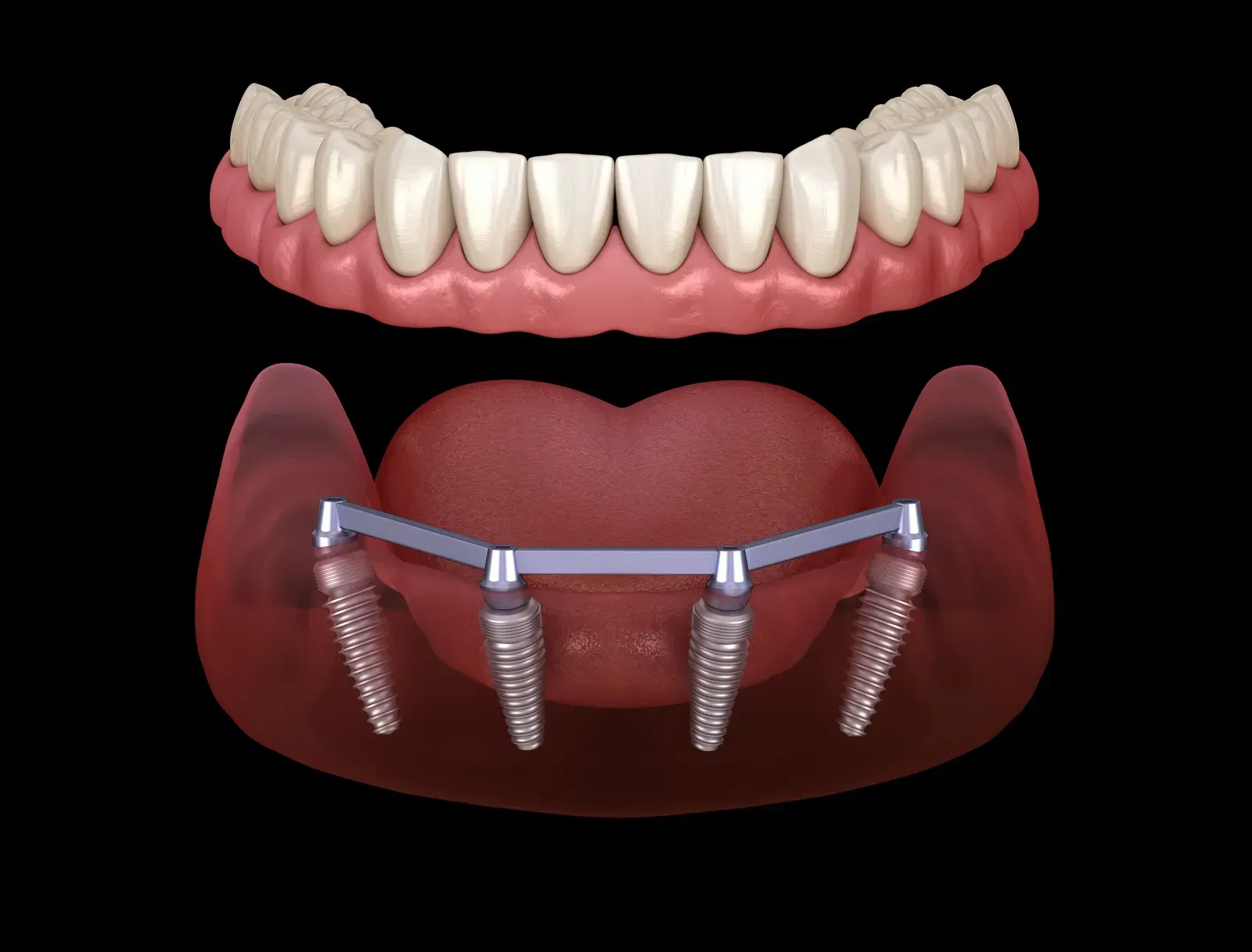
Implants do more than fill a visible gap. Because they replace the root as well as the crown, the benefits reach into your bite, your bone health, and how comfortably you move through an ordinary day.
Because the implant post fuses directly with your jawbone, it can handle significantly more chewing force than a removable denture or a bridge resting on neighboring teeth. Most patients report they can eat the foods they had quietly given up years earlier, from crunchy vegetables to chewier cuts of meat.
The implant post stimulates the jawbone the same way a natural tooth root does, which slows and often halts the resorption that follows tooth loss. This matters for facial structure over time, since untreated bone loss can eventually change the shape of your jawline and cheeks.
Traditional bridges require grinding down healthy adjacent teeth to anchor the restoration. Implants stand independently, so your remaining natural teeth are not altered or weakened to support your new tooth.
The crown placed on top of the implant is custom shaded and shaped to match your surrounding teeth, so it blends in rather than standing out. Most people who meet you after treatment never notice which tooth was replaced.
If you currently wear a removable partial or full denture, implant-supported options eliminate the shifting, clicking, and adhesive dependence that come with traditional appliances. Your new teeth stay firmly in place whether you're eating, speaking, or laughing.
Gaps and ill-fitting dentures can cause whistling, slurring, or mumbled speech. A stable, properly fitted implant restoration lets your tongue and lips function the way they're used to, so words come out clearly again.
With proper care, the implant post itself can last decades, and many patients never need to replace it. While the upfront investment is higher than a bridge or denture, the longevity often makes it more cost-effective over a lifetime of care.
An implant crown is brushed and flossed just like a natural tooth, with no special soaking, adhesives, or removal required. This simplicity makes it easier to maintain consistent oral hygiene without added daily routines.
Not everyone's situation looks the same. Some patients are missing a single tooth from an old injury, while others have struggled with loose dentures for years. These are the signals we hear most often from patients who go on to become excellent implant candidates.
Whether from decay, injury, or extraction, any gap in your smile is a candidate for implant replacement, regardless of how long ago the tooth was lost.
If your existing bridge feels unstable or the supporting teeth are showing decay, an implant-supported replacement can eliminate the dependence on weakened natural teeth.
Sore spots, slipping during meals, or relying on adhesive paste throughout the day are common signs that implant-retained dentures could offer far more stability.
If you've quietly cut meats, nuts, or raw vegetables out of your diet because chewing feels unpredictable or uncomfortable, this is often a sign of reduced bite support.
Long-term tooth loss can cause the lower face to appear collapsed or prematurely aged, which implants can help prevent or sometimes partially restore with bone grafting.
Ongoing tenderness, irritation, or food trapping around a healed extraction site can indicate it's time to fill that space with a permanent restoration.
Many patients unconsciously cover their mouth or avoid smiling in photos because of a visible gap, which implants resolve permanently and naturally.
Open spaces allow neighboring teeth to shift over time, which can throw off your bite and make future orthodontic or restorative work more complicated.
When a tooth has fractured below the gumline or a root canal isn't a viable option, extraction followed by an implant is often the most predictable long-term solution.
If you're simply tired of taking teeth in and out each night, implant-supported solutions offer a fixed, permanent alternative.
Because bone density, gum health, and bite alignment vary so much from person to person, a thorough evaluation with imaging is the only reliable way to confirm candidacy and avoid complications before treatment begins.
Understanding why a tooth was lost helps us plan a more successful implant outcome. Most tooth loss develops gradually, often from more than one contributing factor working together over time.
Untreated gum infection destroys the bone and ligament supporting your teeth, which is the leading cause of adult tooth loss nationwide.
Deep cavities that reach the nerve without timely treatment can progress to infection and eventual extraction.
Sports injuries, falls, or car accidents can fracture or knock out a tooth beyond the point of being saved.
Years of grinding can crack teeth or loosen them in their sockets, eventually requiring extraction.
A tooth that has already had extensive restorative work is more prone to fracture, especially under heavy biting forces.
Removable dentures do not stimulate the jawbone the way natural roots do, which accelerates bone loss the longer they are worn alone.
Some patients naturally have thinner jawbone or are more prone to gum disease regardless of how well they care for their teeth.
Tobacco restricts blood flow to the gums and bone, slowing healing and increasing the risk of both tooth loss and implant complications.
Every implant case follows a structured sequence, but the details, timeline, and number of appointments are shaped entirely around your mouth and healing pace. Here's what the journey typically looks like.
We start by listening to your history, concerns, and what you want your smile and bite to feel like again. This conversation shapes every decision that follows.
Using detailed cone beam imaging, we measure bone density, map nerve positions, and identify the ideal implant location before any treatment begins.
We outline the number of implants needed, whether bone grafting is required, the restoration style, and a realistic cost and timeline before you commit to anything.
The titanium post is placed into the jawbone under local anesthesia in a precise, minimally invasive procedure designed to keep you comfortable throughout.
Over the following months, the implant fuses securely with your jawbone, a process that forms the strong, long-term foundation your new tooth will rely on.
Once healing is confirmed, your custom-shaded restoration is attached, completing a smile that looks, feels, and functions like your natural teeth.
The success of a dental implant depends almost entirely on a biological process called osseointegration, where living bone cells grow directly onto the surface of the titanium post. This fusion is what allows an implant to withstand the same biting forces as a natural tooth root, sometimes exceeding 200 pounds per square inch in the back of the mouth. Titanium is used specifically because the body recognizes it as biocompatible rather than foreign, which allows this bond to form reliably over a period of several months.
When a tooth is lost and left untreated for an extended period, the jawbone in that area begins to resorb at a steady rate because it no longer receives functional stimulation. This is why patients who wait years to replace a missing tooth often require bone grafting before an implant can be safely placed. Delaying treatment doesn't just leave a visible gap; it actively reduces the amount of healthy bone available for a future, more straightforward implant procedure.
By placing an implant sooner rather than later, we can often avoid additional grafting procedures, shorten your overall treatment timeline, and preserve more of your natural facial structure. This is one of the main reasons we encourage patients to address a missing tooth promptly rather than postponing the decision.
A dental implant is built to last, but a few consistent habits at home will help protect your investment and keep the surrounding gum tissue healthy for years to come.
Plaque can build up around an implant crown just as it would on a natural tooth, so consistent brushing and flossing are essential to prevent gum inflammation around the implant site.
A water flosser can clean around the base of the crown and under bridges more thoroughly than string floss alone, especially for implant-supported bridges.
While implant crowns are durable, excessive force from chewing ice, hard candy, or pens can chip or damage the restoration over time.
If you clench or grind at night, a custom nightguard protects both your implant and your natural teeth from excessive wear and pressure.
Routine visits let us monitor the gum tissue and bone around your implant, catching any early signs of irritation before they become bigger problems.
Smoking restricts blood flow to the gums and bone, which can compromise healing and shorten the long-term lifespan of your implant.
These habits support the long-term health of your implant, but they're not a substitute for professional monitoring. Please reach out if you notice any looseness, discomfort, or swelling around your restoration.
If a gap, a loose bridge, or an uncomfortable denture has been holding your smile back, let's talk through your options. A short consultation is the first step toward a permanent, natural-feeling replacement.
Visit us at 150 S Glendora Ave, Glendora, CA 91741
Call us directly at (626) 852-0023
Here are the questions we hear most often from Glendora patients considering dental implants.
Implant cost varies based on how many teeth need replacement, whether bone grafting is required, and the type of restoration chosen, such as a single crown versus a full-arch solution. During your consultation, we provide a detailed, itemized estimate so there are no surprises. We also discuss financing options to help make treatment more manageable.
The placement procedure is performed under local anesthesia, so most patients feel pressure rather than pain during the appointment. Mild soreness and swelling for a few days afterward is normal and typically managed well with over-the-counter pain relief. Most patients report the recovery is far more comfortable than they expected.
From placement to final restoration, the full process typically spans three to six
Glendora Healthy Smiles
Join the Glendora Healthy Smiles family and experience gentle, modern dental care designed around you. Book your visit today - we can't wait to meet you.