(626) 323-9443

 432 W Foothill Blvd, Glendora, CA 91741, USA

Losing a tooth as an adult is more common than most people realize, and it is rarely just a cosmetic concern. Whether the cause is an injury, advanced decay, or gum disease, an empty space in your smile changes the way you chew, speak, and even how your jawbone holds its shape over time. For decades, bridges and dentures were the only real options. Today, dental implants give patients in Glendora a way to replace a tooth root itself, not just the visible crown, which is why so many dentists now consider implants the gold standard for tooth replacement.
At Glendora Healthy Smiles, we talk with patients every week who are unsure whether an implant is the right choice, worried about the cost, or simply nervous about the idea of oral surgery. Those are fair concerns, and they deserve honest, detailed answers rather than a sales pitch. This article walks through how dental implants work, who tends to be a good candidate, what the procedure and healing process actually involve, and the questions we hear most often in our Glendora, California office.
Our goal is to help you understand your options clearly enough to make a confident decision, whether that means moving forward with implants, exploring an alternative, or simply knowing what questions to bring to your next appointment.
How Dental Implants Actually Work
A dental implant is made up of three parts: a small titanium post that replaces the tooth root, an abutment that connects to the post, and a custom-made crown that sits on top and looks like a natural tooth. The titanium post is placed directly into the jawbone, where over the following months it fuses to the surrounding bone through a process called osseointegration. This fusion is what gives implants their strength and stability, letting them function much like a natural tooth root rather than resting loosely on the gums the way a denture does.
This matters for more than just chewing comfort. When a tooth is lost, the jawbone in that area begins to shrink because it no longer receives the stimulation it needs from a tooth root. Over years, this bone loss can change the shape of your jaw and face. Because an implant replaces the root itself, it continues to stimulate the bone in a way that bridges and removable dentures cannot, which is one of the main reasons dentists recommend implants whenever bone health and budget allow it.
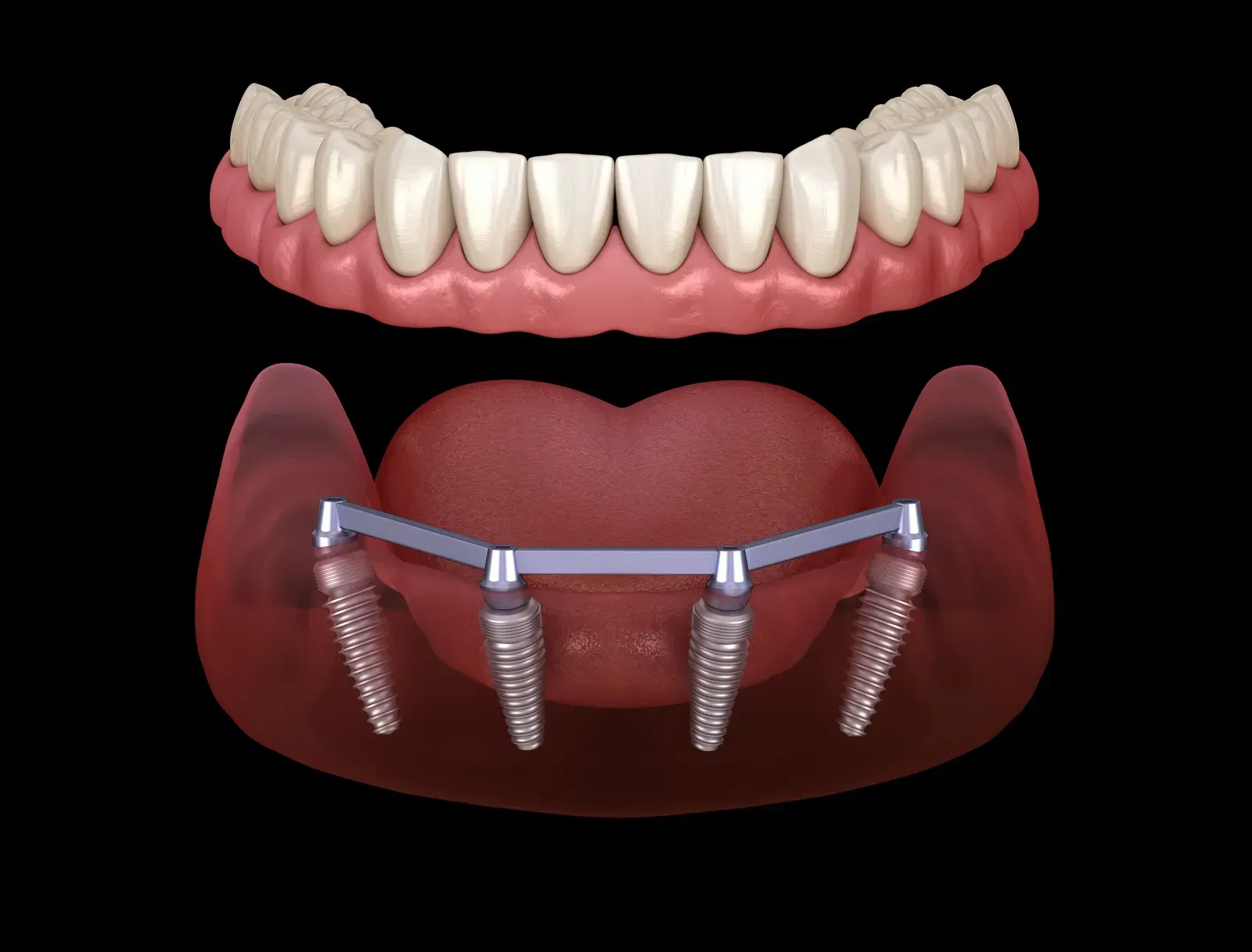
Implants can replace a single tooth, several teeth with a bridge anchored by two or more implants, or an entire arch using techniques like implant-supported dentures. The approach we recommend always depends on how many teeth are missing, the condition of your jawbone, and your overall oral health.
Who Makes a Good Candidate for Implants?
Most healthy adults missing one or more teeth are reasonable candidates for dental implants, but a few factors determine how straightforward the process will be. Sufficient jawbone density is important since the implant post needs enough solid bone to anchor into. If bone has already thinned out from years without a tooth in place, a bone graft can often rebuild enough volume before or during the implant procedure, so a lack of bone today does not automatically rule someone out.
Gum health matters just as much as bone health. Active gum disease needs to be treated and stabilized first, because implants placed in inflamed or infected tissue have a much higher chance of failing. We also look closely at habits like smoking, which slows healing and meaningfully raises the risk of implant failure, along with conditions such as uncontrolled diabetes that can affect how well the bone fuses to the implant post.
- Adults with one or more missing teeth: whether from an extraction, injury, or decay, implants replace the full tooth structure rather than just the crown.
- Patients with adequate jawbone, or who are open to grafting: a bone graft can rebuild the foundation needed for a stable implant.
- Patients in good general health: well-managed chronic conditions typically do not prevent implant treatment, but they do call for closer monitoring.
- Non-smokers, or those willing to pause smoking: reducing tobacco use around the time of surgery significantly improves healing success.
The Implant Procedure, Step by Step
The implant process unfolds in stages rather than a single appointment, and understanding the timeline helps set realistic expectations. It begins with a consultation that includes a full oral exam, X-rays, and often a 3D scan to evaluate bone volume and plan exact implant placement. This is also when we discuss whether you are a candidate for same-day extraction and implant placement or whether a healing period is needed first.
The surgical placement itself is typically done under local anesthesia and feels similar to a tooth extraction in terms of discomfort. The titanium post is positioned into the jawbone, and a protective cap or temporary restoration may be placed over it while healing occurs. Osseointegration, the fusion of bone to the implant, generally takes anywhere from three to six months depending on bone quality and the location in the mouth.
Once the implant has fully integrated, we attach the abutment and take impressions for your final crown, bridge, or denture. The finished restoration is then custom-shaded and shaped to blend with your surrounding teeth. Patients who are also interested in refining the appearance of nearby teeth sometimes pair implant treatment with cosmetic dentistry services to create a more uniform, natural-looking smile overall.
What Recovery Really Feels Like
Most patients describe implant recovery as more manageable than they expected. Mild swelling, soreness, and some bruising around the surgical site are common for the first few days, and over-the-counter pain relievers are usually enough to keep things comfortable. We typically recommend soft foods for the first week or so, along with cool compresses to help with swelling and plenty of rest in the first 48 hours.
Early Healing Versus Long-Term Integration
There is a real difference between feeling recovered and the implant being fully integrated. Soft tissue around the implant usually heals within one to two weeks, which is when most of the initial discomfort fades. The deeper process of bone fusing to the titanium post, however, continues quietly for months after you have returned to your normal routine. This is exactly why your dentist waits until integration is confirmed before placing the final crown, rather than rushing the final restoration.
Following post-op instructions closely during this window, including avoiding hard or crunchy foods on the implant side and keeping up with any prescribed rinses, gives the implant the best possible chance of long-term success.
What Affects the Cost of Dental Implants
One of the first questions nearly every patient asks is what a dental implant will cost, and the honest answer is that it depends on several individual factors. A single implant with a crown generally represents a bigger upfront investment than a traditional bridge or partial denture, but it is also designed to last much longer with proper care, which changes the value equation over time.
The number of teeth being replaced plays the biggest role in total cost, since a single-tooth implant is priced very differently from a full-arch implant-supported denture. Additional procedures like bone grafting, sinus lifts, or tooth extractions prior to placement will also factor into the total treatment plan. The materials used for the final crown, the complexity of your case, and whether you need any preliminary gum treatment all contribute as well.
Many dental insurance plans now cover at least a portion of implant treatment, particularly the restorative crown, even if they classify the surgical placement differently. During your consultation, our team will walk through a detailed breakdown of costs, review your insurance benefits, and discuss financing options so there are no surprises before treatment begins.
Caring for Your Implant Long-Term
With proper care, a dental implant can last decades, and many patients keep theirs for life. The titanium post itself cannot develop decay the way a natural tooth root can, but the gum and bone surrounding it still need the same attention as your natural teeth. A condition called peri-implantitis, which is essentially gum disease around an implant, is the most common reason implants eventually fail, and it is almost always preventable with consistent home care and regular checkups.
Brushing twice daily, flossing or using an interdental brush around the implant crown, and keeping up with routine professional cleanings all go a long way toward protecting your investment. We also recommend patients who grind their teeth at night wear a protective nightguard, since excessive force can loosen the crown or stress the implant over time. Patients interested in keeping their whole smile looking its best alongside a new implant crown sometimes ask about teeth whitening for their natural teeth, since implant crowns themselves do not respond to whitening treatments and are shaded to match your smile at the time they are made.
Regular dental visits let us catch small issues, like minor bone changes or gum recession, before they become bigger problems. If you already have an implant placed elsewhere, our Glendora office is happy to take over ongoing maintenance and monitoring as part of your routine care.
Key Takeaways
- Dental implants replace the tooth root, not just the crown, which helps preserve jawbone density long-term.
- Good candidates need healthy gums and adequate bone, though bone grafting can often make treatment possible.
- The full process, from placement to final crown, typically spans three to six months due to bone integration.
- Cost varies based on how many teeth are replaced and whether grafting or other prep work is needed.
- Consistent oral hygiene and regular checkups are what allow an implant to last for decades.
Frequently Asked Questions
Is getting a dental implant painful?
Most patients are surprised by how manageable the procedure is. The placement is done with local anesthesia, so you should not feel pain during surgery, and any post-operative soreness is typically mild and controlled with over-the-counter medication. Discomfort usually peaks within the first couple of days and improves steadily from there.
How long do dental implants actually last?
The titanium implant post itself can last a lifetime once it has fully fused with the jawbone. The crown on top, which experiences normal wear from chewing, generally lasts 10 to 15 years or longer before it may need replacement. Keeping up with cleanings and avoiding excessive grinding both extend the lifespan of the restoration.
Can I get an implant if I have been missing a tooth for years?
Yes, though a longer gap without a tooth often means some bone loss has occurred in that area. That is not a dealbreaker; a bone graft can rebuild enough volume to support an implant safely. A 3D scan during your consultation gives us a clear picture of what the site looks like and what preparation, if any, is needed.
What is the difference between an implant and a bridge?
A traditional bridge relies on the teeth next to the gap being shaved down to support a crown that spans the space, while an implant stands on its own without affecting neighboring teeth. Implants also preserve jawbone in a way bridges cannot, since they replace the root rather than sitting entirely above the gumline.
How many visits does the entire process take?
A straightforward single-tooth implant usually involves a consultation visit, the surgical placement appointment, and a final visit for the crown, with a few check-ins during the healing period in between. Cases that require grafting or multiple implants will involve additional appointments, which we map out in detail during your treatment planning visit.
Making a Confident Decision About Your Smile
Replacing a missing tooth is not just about appearance, it is about protecting the health of your bite, your jawbone, and your ability to eat comfortably for years to come. Dental implants have earned their reputation as a durable, natural-feeling solution because they address the problem at its root, quite literally, rather than simply covering the gap. For the right candidate, that difference shows up in daily comfort and in long-term oral health.
Every mouth is different, and the best way to know whether implants are the right fit for you is a thorough evaluation with a dentist who can review your bone structure, gum health, and goals in detail. Our team at Glendora Healthy Smiles is glad to walk you through your options, answer the questions that matter most to you, and help you decide on a path forward that fits your smile and your budget.